
Seed, mulch and grade for Chicagoland
Hydroseeding in Chicago, IL
New lawns, construction sites and washed-out slopes, seeded on flat, slow-draining prairie ground.
- No-charge yard walk-throughs with a quote in writing
- Seed mix matched to the sun, shade and soil on your lot
- Watering and first-mow instructions in writing with every job
Getting Grass to Take on Flat Clay Ground
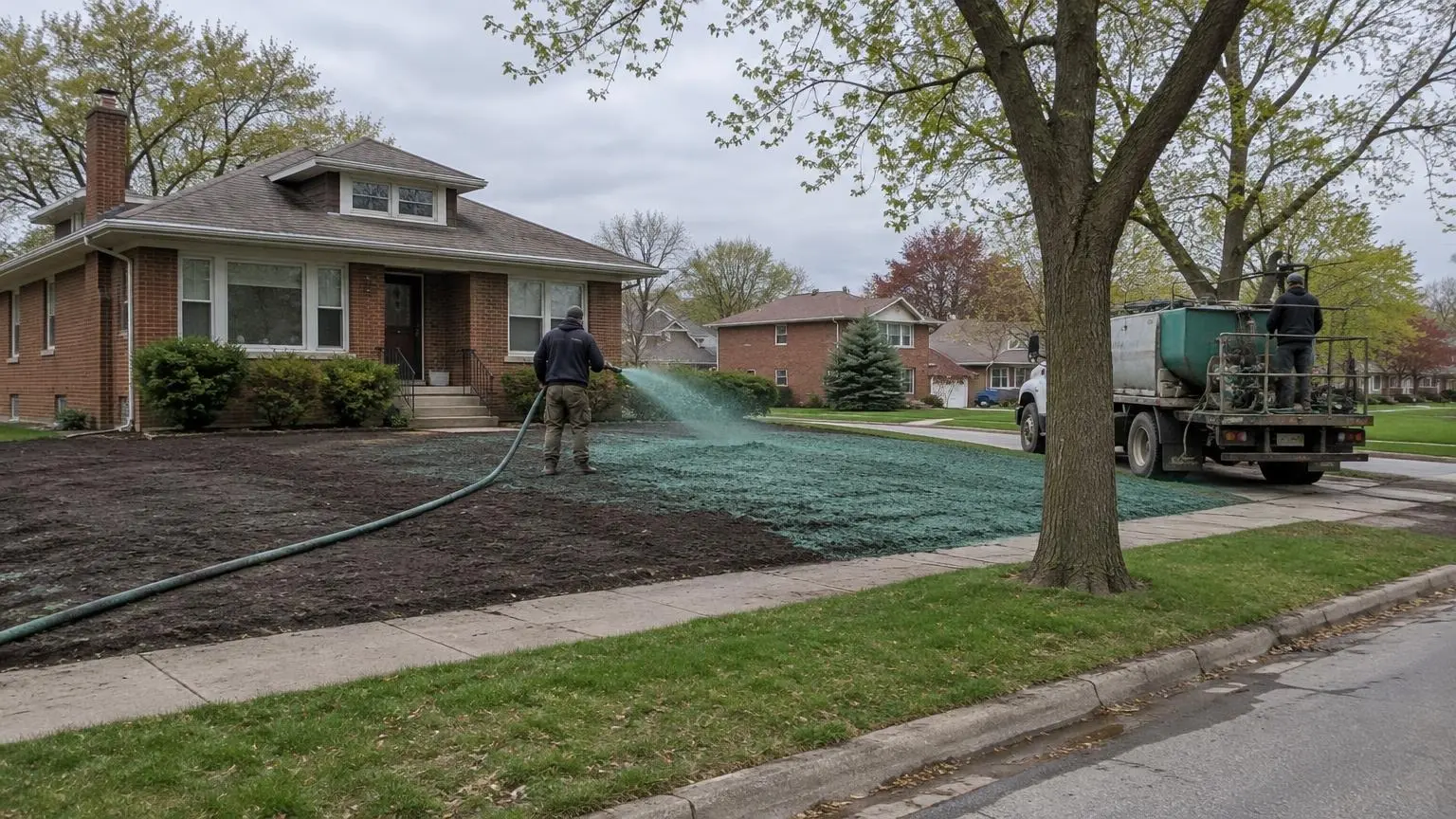
Hydroseeding sprays grass seed, wood or paper mulch, fertilizer and a tackifier together in one wet slurry, so the seed lands already covered and held in place. In Chicago and its suburbs, that matters more than people expect. The city is built on ground that Wikipedia describes as naturally flat, rising less than a hundred feet from the lakeshore to the old moraine ridge at Blue Island on the far South Side. Out in the collar counties the land rolls more, but the soil underneath is mostly the same story: fine silt and clay left by glaciers. Water lingers on this ground. A dry-seeded lawn on bare clay is at the mercy of the next storm, while a hydroseeded lawn has a mulch blanket on it from the first hour.
What the soil is like here
The USDA's description of the Markham series, a soil first mapped in Lake County with its sample site in DuPage County, gives a good picture of a typical suburban yard: a dark silt loam topsoil only six to nine inches thick, then silty clay loam subsoil that runs 35 to 45 percent clay, sitting on very firm glacial till. The USDA rates its permeability as slow and notes a perched water table two to three and a half feet down in most springs. The Drummer soil, which Illinois adopted as its state soil, is darker and richer but rated poorly drained by nature, formed under prairie on loess over glacial drift.
What that means on a job: after a builder strips and regrades a lot, the thin black topsoil is often gone or buried, and the seed ends up sitting on compacted subsoil. We check that before anything else. If there is not enough topsoil to hold moisture and roots, we say so and price it, because seed on bare clay will come up thin no matter how it was applied.
Rain, heat and the seeding calendar
Chicago's 1991 to 2020 normals put annual precipitation at about 41 inches at Midway and 38 inches at O'Hare, with May the wettest month at both airports. Most of that rain comes in thunderstorms, and a heavy one on a freshly dry-seeded yard can push seed into low spots and leave bare streaks on any grade. Summers are hot and humid, with about 17 days in a normal year reaching 90 degrees, and spring and fall are short.
Lawns in this region are built from cool-season species, chiefly Kentucky bluegrass, perennial rye, and both tall and fine fescues. University of Illinois Extension says late summer to early fall is the ideal time to seed them, and for northern Illinois it narrows that to early August through early September. April is the second choice. Seeding in late spring through midsummer often runs into trouble because summer heat slows or stops these grasses. So when someone calls us in June, we can still spray, but we will be honest that the watering load is higher and the stand may need touching up in fall.
Sod, hydroseed or dry seed
All three can end up as a good lawn. Illinois Extension notes that if planting is done properly, a seeded lawn and a sodded lawn should end up the same; the differences are in cost, speed and risk.
- Sod is an instant lawn that can be walked on soon after it goes down and keeps mud and erosion down right away. It costs the most, comes in a limited choice of grasses, is not grown for shade, and needs a lot of water at first.
- Dry seed spread by hand or a spreader costs the least but is the easiest to lose. Extension lists rain or irrigation washing seed away, weeds and slow stand development as its weak points, and recommends straw over it.
- Hydroseed sits in between on price. Its fiber layer keeps the seed damp and pinned down on slopes and swales, and you can choose a seed mix for sun or shade. When warmth and moisture cooperate, sprouts usually show within 5 to 7 days, and four to six weeks is the typical wait before the mower comes out.
For most new Chicago-area lawns of a few thousand square feet or more, a hydroseed lawn is the practical middle path. For a tiny city front yard that has to look finished next week, sod may make more sense, and we will tell you that.
Construction sites, stormwater and erosion
Bare dirt on a building site is a stormwater problem as well as a landscaping one. Under the Illinois EPA's general stormwater permit, any project disturbing an acre or more needs coverage, and so does a smaller piece of a bigger phased development or subdivision; coverage needs a Storm Water Pollution Prevention Plan. In Cook County, the Metropolitan Water Reclamation District's Watershed Management Ordinance has applied to development since May 1, 2014, and soil erosion and sediment control is one of the things it regulates.
That is why our crews do more than spray grass. We install silt fence along the low side of a site, protect storm inlets, lay erosion control blankets in swales and ditches, and spray hydromulch or bonded fiber matrix on slopes to hold them until the grass takes over. Builders and site managers can hand us the plan sheet and we will work to it.
Getting the ground right first
A good stand starts below the seed. Before we spray, we look at grade, drainage and topsoil depth. On flat lots the most common problem is water standing near the house or in the middle of the yard, so a little yard grading to move it toward the street or a swale makes a bigger difference than any seed mix. Our grading crews also handle topsoil delivery and spreading, fine raking, and the small excavation and trenching jobs that go with drainage fixes.
For older lawns that have gone thin from shade, grubs, drought or foot traffic, a full renovation is not always needed. Core aeration and overseeding or a targeted hydroseed patch can bring them back, ideally in that same late summer window.
What to expect on spraying day and after
On the day we spray, the slurry goes on green so you can see the coverage, and it dries to a light mat within a day or so. From then on, watering is the job. University of Nebraska Extension suggests that on hot days newly hydroseeded ground get water at least two or three separate times daily, keeping the top of the soil damp but not puddled. On Chicago clay, puddling happens fast, so short and frequent beats long and heavy. We leave a written schedule and tell you when to switch to deeper, less frequent watering once the grass is up.
Keep people and pets off for the first few weeks, hold off on weed killers until the lawn has been mowed several times, and mow the first time when the grass reaches about three to three and a half inches. If you want to see what your yard would need, get a free estimate
Neighborhoods and Suburbs on Our Route
We work in Chicago and out through Cook, DuPage, Will, Kane, McHenry, Lake and Kendall counties. Close in, Wheaton, Lisle and Bolingbrook mix established yards with drainage problems, wetland edges and teardown lots. Along the Fox River, Elgin, St. Charles, Aurora, Algonquin and Oswego have river-bank lots and subdivisions from every decade. To the southwest, Naperville, Plainfield, Romeoville, Lockport, Joliet, New Lenox, Minooka and Yorkville have flat, fast-growing ground and a lot of builder lawns that need seeding or rescuing. Lemont is hillier than most of the metro. In the north and northwest, Crystal Lake, Lake in the Hills, Huntley and Gurnee range from rolling hills to warehouse acreage, and Highland Park and Lake Forest have ravines, bluffs and big lawns at the edge of prairie preserves. Pick a town below for the soil, slope and drainage notes that apply there.
- Hydroseeding in Chicago, IL
- Hydroseeding in Naperville, IL
- Hydroseeding in Aurora, IL
- Hydroseeding in Joliet, IL
- Hydroseeding in Plainfield, IL
- Hydroseeding in Oswego, IL
- Hydroseeding in Yorkville, IL
- Hydroseeding in Elgin, IL
- Hydroseeding in Huntley, IL
- Hydroseeding in Lockport, IL
- Hydroseeding in Lemont, IL
- Hydroseeding in Crystal Lake, IL
- Hydroseeding in Highland Park, IL
- Hydroseeding in Lake Forest, IL
- Hydroseeding in Bolingbrook, IL
- Hydroseeding in New Lenox, IL
- Hydroseeding in Algonquin, IL
- Hydroseeding in St. Charles, IL
- Hydroseeding in Romeoville, IL
- Hydroseeding in Lake in the Hills, IL
- Hydroseeding in Wheaton, IL
- Hydroseeding in Minooka, IL
- Hydroseeding in Lisle, IL
- Hydroseeding in Gurnee, IL
Why Homeowners Call Hydroseeding Chicago
Soil checked before seed
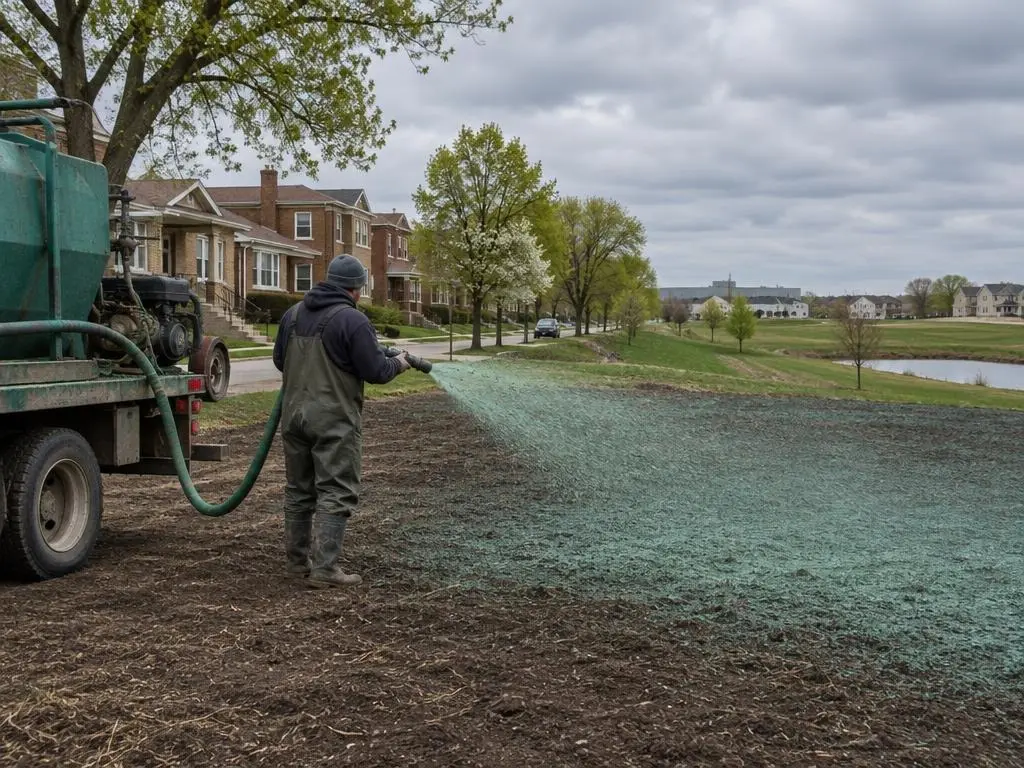
We look at topsoil depth and compaction on every job, because seed on stripped clay comes up thin.
Timed to the Illinois calendar
We push for early August to early September seeding and tell you the tradeoffs of spring or summer dates.
Erosion work in-house
Silt fence, inlet protection, blankets and slope mulch are done by the same crew that seeds the site.
Line-item estimates
Grading, topsoil, seed, mulch and erosion control each get their own line, so every dollar on the quote is tied to a piece of work.
Common Questions
Is there a downside to hydroseeding?
Yes, a few. It costs more than spreading dry seed yourself, it needs steady watering for several weeks, and it is not an instant lawn like sod. It also cannot fix bad soil: if the yard is bare compacted clay, the topsoil and grade have to be dealt with first.
What type of grass seed should I use in Chicago?
Cool-season grasses. Most sunny lawns here do well with Kentucky bluegrass, often mixed with perennial ryegrass for quick cover. Shady yards do better with more fine fescue, and tall fescue holds up in heavier wear and drier spots. We pick the mix for each area of the yard on the site visit.
Which months give a Chicago-area hydroseed lawn its strongest start?
University of Illinois Extension puts the ideal window for northern Illinois at early August to early September, with April as the second choice. We can spray from spring through fall, but late spring and midsummer seedings need more water and more attention because heat slows cool-season grass.
How soon will I be mowing a new hydroseed lawn?
Seed usually begins sprouting within about 5 to 7 days when it stays warm and moist. Expect the first cut around four to six weeks after spraying, when the blades stand near three inches.
How often do I water after hydroseeding?
During hot stretches in the first few weeks, give the seeded area short, light waterings two or three separate times each day, just enough to keep the surface damp without puddles. Clay soil here puddles easily, so shorter cycles are better than long ones. Once the grass is up, water less often but more deeply.
Do I need silt fence on my construction site?
Once a site disturbs at least an acre, or is one piece of a bigger subdivision or phased project, the Illinois EPA stormwater permit applies and the site's pollution prevention plan will call for sediment controls. In Cook County, the MWRD's Watershed Management Ordinance also covers erosion and sediment control. Smaller jobs may still need it under local rules, so check with your village or engineer.
Can you hydroseed over an existing lawn?
We can spray into a thin lawn after it has been mowed short and aerated or slit, so the seed reaches soil. If the old lawn is mostly weeds, it is better to kill and remove it first and start over.
What We Seed, Stabilize and Grade
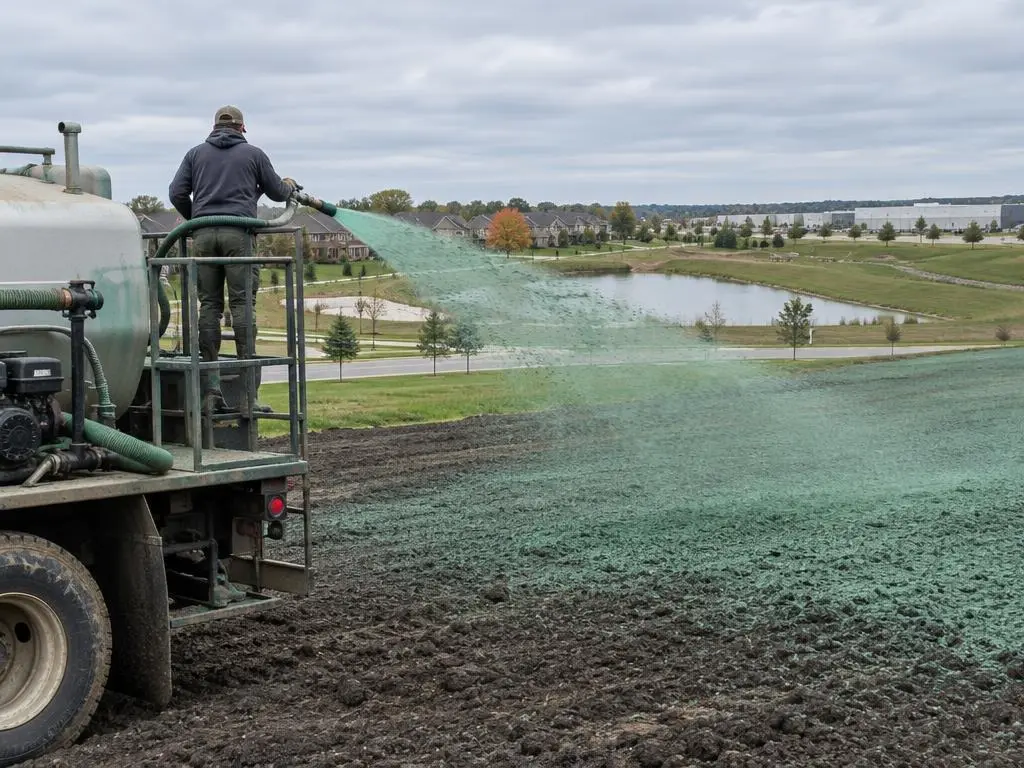
Six lines of work, sized for anything between one Chicago backyard and a whole subdivision of bare dirt.
New Lawn Hydroseeding
Seed, mulch and starter fertilizer sprayed on prepared soil for new and rebuilt lawns.
Learn more →Commercial & Builder Hydroseeding
Large-area seeding for subdivisions, commercial lots, detention basins and road edges.
Learn more →Slope & Swale Erosion Control
Blankets, hydromulch and bonded fiber matrix to hold slopes, swales and ditches until grass takes over.
Learn more →Silt Fence & Inlet Protection
Silt fence, inlet protection and sediment control set up and maintained for construction sites.
Learn more →Grading, Topsoil & Dirt Work
Yard grading, topsoil spreading and the earthwork that sets ground up to drain and take seed.
Learn more →Lawn Repair & Overseeding
Aeration, overseeding and patch hydroseeding to bring thin or damaged lawns back.
Learn more →Book a Site Visit for Your Lawn or Lot
Free walk-throughs and written estimates across Chicagoland.